

Computer Vision (CS-GY 6643)
Fall 2026

Forecasting Motion in the Wild: Thakkar et al, EECV 2026 [link]
A central goal of signal processing and artificial intelligence (AI) is to enable computers to understand and interpret visual information. Computer vision focuses on extracting meaningful measurements and representations of physical objects from images using techniques from image processing, pattern recognition, geometric modeling, cognitive processing, and machine and deep learning. This course covers the fundamental concepts and techniques of image processing and computer vision at an intermediate level, combining theoretical understanding with practical application. Students will also participate in Kaggle competitions to apply course concepts to real datasets, along with a midterm examination to evaluate their understanding of the material.
This is a graduate level course requiring working knowledge of linear algebra, data structures and proficiency in programming (python). Advanced undergraduates may enroll upon permission from the instructor.
Course information:
Time: Thursdays 11am-1:30pm
Place: Room 475, 6 MetroTech Center
Slack channel: nyucomputervision.slack.com
Syllabus: link
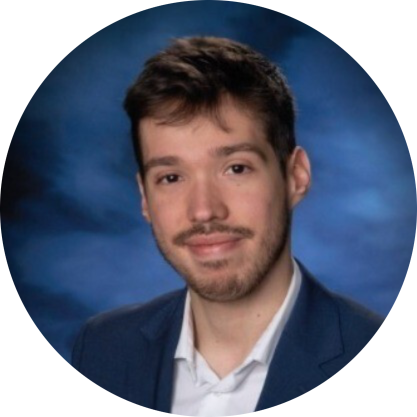
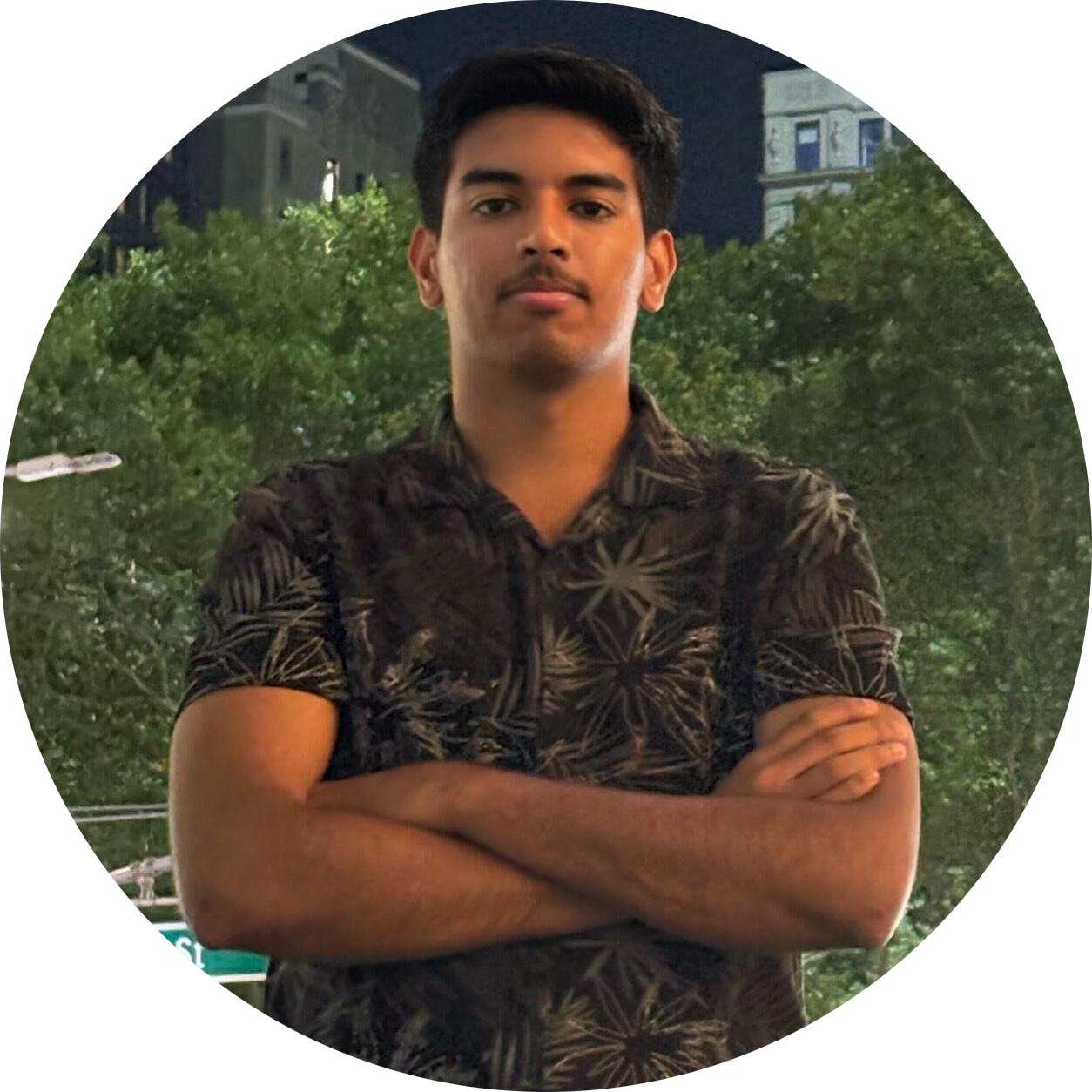
Course team:



Grading breakdown: In-class midterm 25%, Programming Projects 75%
Online Discussion: Preferred course communication will be via Slack, so please join our site from using this link: nyucomputervision.slack.com. All questions should also be posted to Slack (not sent via emails). We prefer that lectures or homework questions are asked publicly, since they will often help your classmates. Slack also supports private questions through direct messages for things relevant only to you.
Python and Jupyter: Demos and labs in this class use Python, run through Jupyter notebooks. Jupyter lets you create and edit documents with live Python code and rich comments and images. We suggest that students run their Jupyter notebooks via Google Colaboratory, and we will share them via Colab.
Assignments: Individual programming projects must be turned in to Brightspace by the specified deadline (11:59pm of the due date). Programming projects should be turned in as specified in the project. Note that projects include a competitive component or involve ranking based on performance, we will guide you on the submission for the same. For written project reports, we encourage using LaTeX. You can use this template for LaTeX. While there is a learning curve, these tools typically save students time in the end! If you do write problems by hand, scan and upload as a PDF. Discussion is allowed on homework, but solutions and code must be written independently. See the syllabus for policies. We have a zero tolerance policy for copied code or solutions: any students with duplicate or very similar material will receive a zero on the offending assignment.
Late policy: Every hour that an assignment is late (rounded down) will cause 1% penalization of the total allotted grade. For example, an assignment that is 11 hours 45 minutes late will have a maximum possible score of 89%.
Textbooks: Computer Vision (2nd edition) by Szeliski will accompany the lectures that we cover and specific chapters from this book will be mentioned under reading materials in the schedule below. Textbook is freely available digitally at https://szeliski.org/Book/download.php.
AI Policy: Projects in this class will be divided into two tracks: AI Track and Human Track. Students in the AI Track are allowed to use AI for debugging, writing code, and other use cases. Students in the Human Track are only allowed to use AI for debugging report generation; and not code generation, ideation or any other uses. Students are allowed to use AI if they declare it in the team selection sheet shared along with the project. Student can switch from the Human to the AI track during a project, however, they cannot switch back from the AI track to the Human Track. Students are allowed to pick different tracks for different projects. Students will be curved based on the track they choose.
Tutorials:Linear algebra,Google Colab, Python
The previous iteration of the course is available here.
Schedule
| Date | Topic | Material |
Projects |
|---|---|---|---|
| September 3, 2026 |
Intro and survey of topics, Image Formation, Filtering and Edge Detection |
Lecture 1, Codelab 1, Python Tutorial, Google Colab Setup, Szeliski Ch. 1,3.1-3.2,3.3.1 | First Project Released |
| September 10, 2026 |
Feature Detection & matching |
Lecture 2, Codelab 2, Szeliski Ch. 7.1.1-7.1.3,7.2.1-7.2.2 | |
| September 17, 2026 |
Image alignment |
Lecture 3, Codelab 3, Szeliski Ch. 2.1.1, 8.2 | |
| September 24, 2026 |
Segmentation |
Lecture 4, Codelab 4, Szeliski Ch. 6.4 | Second Project Released, First Project due |
| October 1, 2026 |
Machine Learning ,Backprop with MLP, Neural Networks |
Lecture 5, Codelab 5, Szeliski Ch. 5.3–5.4, 6.3.3 | |
| October 8, 2026 |
Convolutional Neural Networks; YOLO |
Lecture 6, Codelab 6, Szeliski Ch. 5.1–5.3, 4.1.2, 4.3, 7.5 | Second Project due |
| October 15, 2026 |
Midterm |
Midterm | |
| October 22, 2026 |
Motion models, depth estimation and optical flow |
Third Project Released | |
| October 29, 2026 |
Self Supervised Learning, CLIP Embeddings |
||
| November 5, 2026 |
Attention Mechanism, Vision Transformer |
Fourth Project Released, Third Project due | |
| November 12, 2026 |
Structure from Motion |
||
| November 19, 2026 |
Gaussian Splatting |
Final Project Released, Fourth Project due | |
| November 26, 2026 |
THANKSGIVING |
||
| December 3, 2026 |
Vision Language Models |
||
| December 10, 2026 |
Guest Lecture: Neel Dey |
Final Project Due |
Essential reads
Textbooks:
Szeliski, R. (2022). Computer vision: algorithms and applications. Springer Nature. [link]
Milan Sonka, Vaclav Hlavac, and Roger Boyle, Image Processing, Analysis, and Machine Vision, 4th Ed, 2015 [link]
David A. Forsyth and J Ponce, Computer Vision: A Modern Approach, 2012
Simon J. D. Prince, Understanding Deep Learning, 2023.
Aston Zhang, Zachary C. Lipton, Mu Li, and Alexander J. Smola, Dive into Deep Learning, 2023. [link]
Papers
(Under construction)
Courses